Wickedbone Review: A Self-Moving Dog Toy That Fades Fast
Cheerble's $54.99 app-controlled bone rolls, hops and spins for dogs. We look at runtime claims, the awkward pairing step and how long dogs actually stay interested.
Our verdict
A fun toy for a young, playful dog and an owner who enjoys steering it, but the pair-by-charging step is clumsy and interest fades once the novelty goes. The 60-day return window makes it a cheap experiment. Skip it for hard chewers, elderly dogs or anyone hoping it will babysit a dog alone.
- Best for
- Young, playful dogs and owners who join in
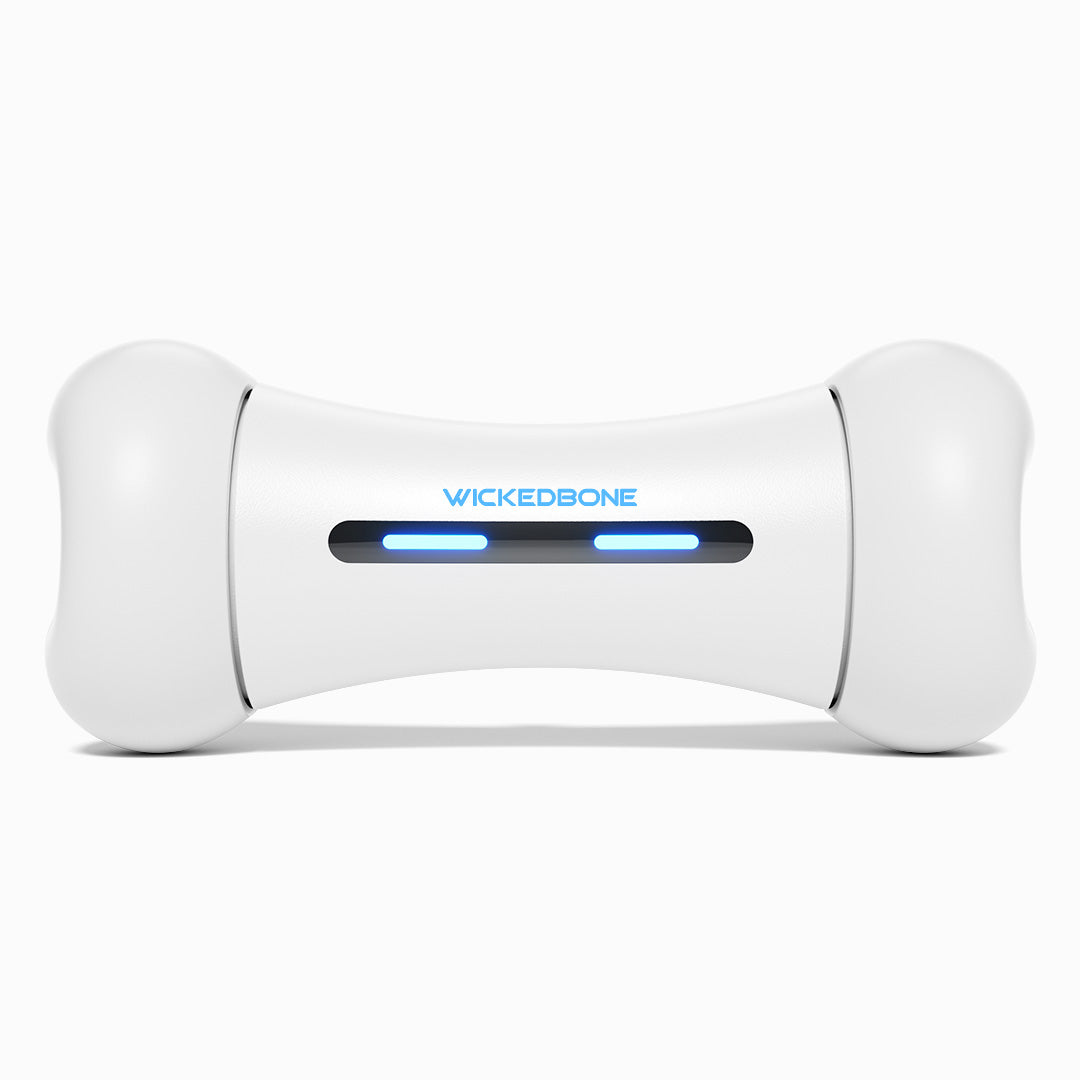
A bored dog does not need more technology. A bored dog needs someone to throw something. The Wickedbone is Cheerble's attempt to automate that someone: a 300 g plastic bone with two wheels hidden in its ends, steered from your phone or left to wriggle around on its own. It costs $54.99, which makes it a modest gamble. The real question is how long a dog cares.
What it is, in numbers
Cheerble's product page gives the specs: 151.5 by 64 by 64 mm, 300 g with the battery, a top speed of 3.5 m/s, a 470 mAh battery and USB charging. Bluetooth control works within about 20 metres. The maker calls the materials food-grade and the toy suitable for moderate chewers, and it recommends supervision.
There are two modes. Drive Mode gives you a virtual joystick and nine preset moves. Interactive Mode runs 12 built-in behaviours that trigger when the dog touches the bone, so it can entertain without you holding a phone.
Runtime is where the sources disagree. Cheerble claims up to two hours a charge. The Gadgeteer, reviewing the same toy line in 2024, measured about an hour in Drive Mode and up to four hours in Interactive Mode, with roughly an hour to recharge. We would plan on the lower number for steered play.
Why the app is the weak link
Everyone who has tested this toy mentions the same irritation. To pair the bone with the app you plug it into a charger and unplug it again each time. It is a small step, but it turns a spontaneous game into a chore, and it is the step you will skip when you are tired.
The control itself gets better marks. The Gadgeteer called the drive mode responsive, and MobileSyrup found the on-screen steering wheel tricky at times. Our view: a touchscreen wheel is a poor way to steer a toy that spins and hops, and you will lose the bone under the sofa more than once.
The other known wear points are small. The rubber charging port cover is easy to lose, and one owner-reported Bluetooth fault appeared after about a year of use. Replacement tyres cost about $10 a set, according to The Gadgeteer, which is useful because the tyres are what dogs destroy first.
Does a dog stay interested?
Here is the honest picture. Novelty carries the first days. A young, ball-obsessed dog will chase it, and a clever one will learn to pin it with a paw and carry it off. The Gadgeteer's French Bulldog made it part of his evening routine. Rover's test dog found the automatic mode too slow: the bursts were short and the waits between them too long to reward the effort.
MobileSyrup's older dog showed intermittent interest, and the writer had more fun than the dog did. That is a fair warning. A toy that depends on your attention is not a babysitter, and a dog that already ignores balls will probably ignore this.
It will not survive a determined chewer either. Cheerble itself limits the claim to moderate chewers, and reviewers expect bite marks on harder biters. If your dog destroys tennis balls in an afternoon, spend the money on a tougher toy.
Buying it
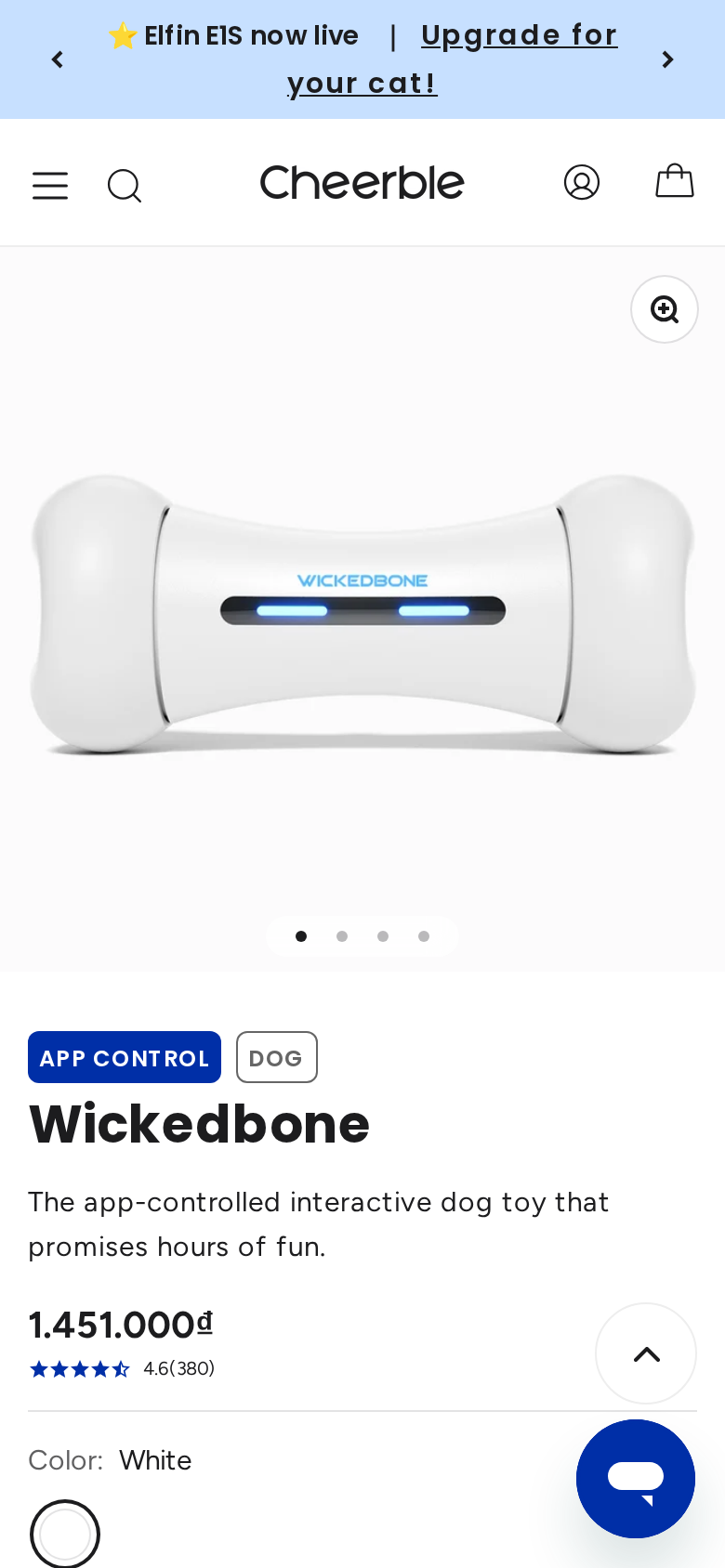
Cheerble offers a 60-day return and replacement guarantee, and independent reviewers describe responsive customer service, including replacements without argument. That is the best reason to try it: the downside is bounded.
Buy it if you have a young, curious dog, you like playing with gadgets yourself and you will actually pair it each evening. Keep it for supervised sessions, away from stairs and hard chewing. Skip it if you want something to occupy a dog while you are out, if your dog is elderly or indifferent to chasing, or if power chewing is the problem you are trying to solve. For that, a plain puzzle feeder will do more for less.
This is a toy review, not behavioural advice. A dog that is destructive, anxious or wakes the house needs a vet or a trainer, not a bone with wheels.
We rate it a middle-of-the-road buy: clever, cheap enough to try, and let down by a clumsy pairing step and a novelty curve that falls off quickly.
What we liked, and what we did not
Pros
- 60-day return and replacement guarantee limits the risk
- Two modes: nine-move joystick drive and 12 touch-triggered behaviours
- Replaceable tyres at about $10 a set extend its life
- Customer service praised for quick replacements
Cons
- Pairing needs a charger plug-and-unplug each time
- Steered play lasted about an hour in independent testing
- Not built for aggressive chewers; bite marks expected
- Dogs lose interest quickly in the automatic mode
Specifications
- Price
- $54.99
- Size and weight
- 151.5 x 64 x 64 mm, 300 g
- Top speed
- 3.5 m/s
- Battery
- 470 mAh Li-Polymer, USB charging
- Runtime
- Up to 2 hours claimed; about 1 hour in Drive Mode tested
- Control range
- Under 20 m by Bluetooth
- Modes
- Drive Mode (9 moves), Interactive Mode (12 behaviours)
- Materials
- Food-grade plastic, removable rubber tyres
- Guarantee
- 60-day return and replacement