SureFeed Microchip Feeder Connect Review: Does It Stop Theft?
A microchip-locked bowl keeps greedy pets off prescription food. We cover the hub cost, the month of lid training, weighing accuracy and the app faults reviewers hit.
Our verdict
The best answer we know to food theft in a multi-pet home, with a lid that opens only for the registered chip and weight logging that is good for trends. Expect a month of coaching, a separate Hub and some app glitches. Skip it for a single pet, for gram-exact diets or for a house of pets that tailgate.
- Best for
- Multi-pet homes with one pet on a prescription diet
Most smart feeders solve a schedule problem. This one solves a thief problem. If one cat in your house eats a kidney diet and the other considers that bowl a buffet, a timer will not help: the greedy one simply gets there first. The SureFeed Microchip Pet Feeder Connect keeps its lid shut unless the pet standing in front of it carries the right microchip or collar tag. It works, with caveats about cost, cleaning and a month of coaching.
How the lid decides
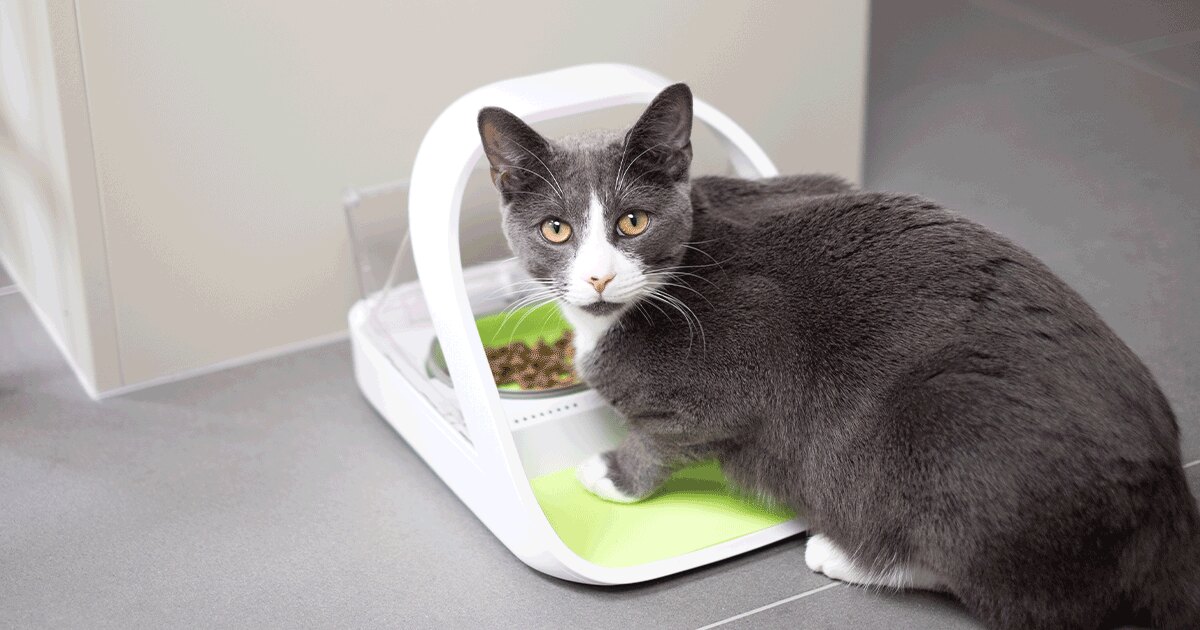
Cats and small dogs approach the bowl. A reader in the housing detects the pet's microchip (or a Sure Petcare RFID collar tag), checks it against the profile you registered in the app, and a hinged lid retracts. When the pet walks away, the lid closes again after a delay you can set. Registration is a matter of pressing the app's Add Animal button and guiding the pet's head through the scanner, Expert Reviews reports.
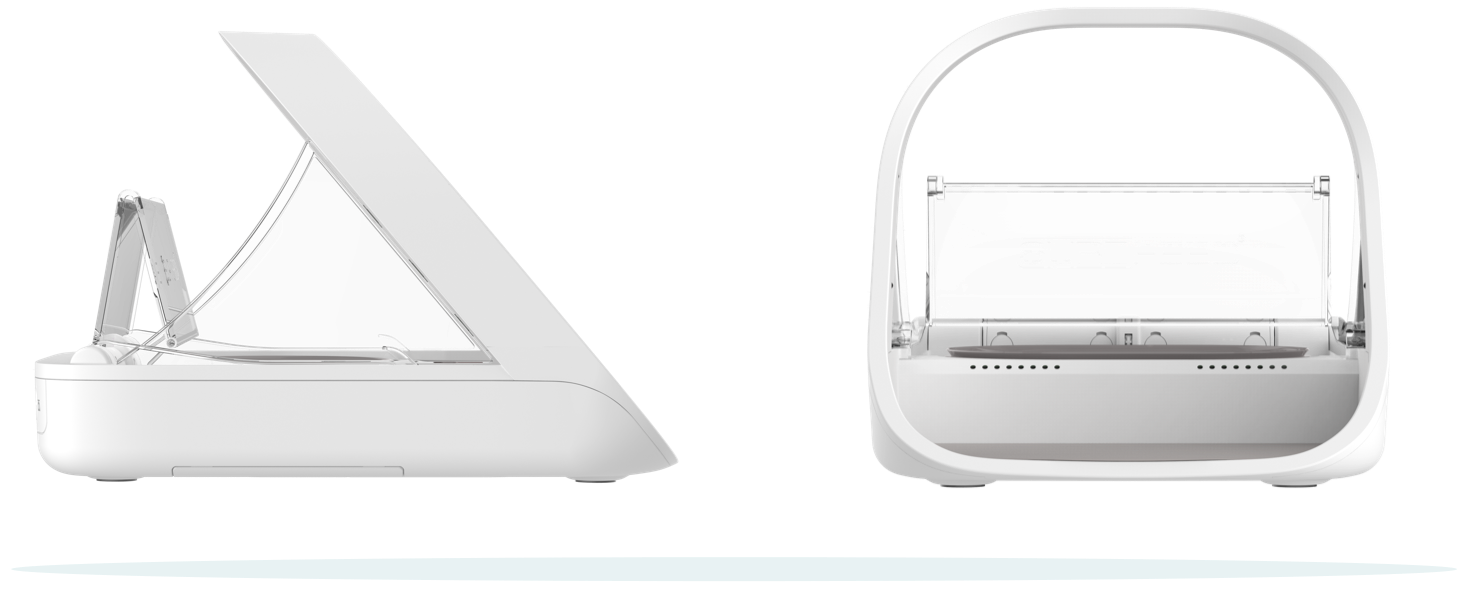
The bowl holds 400 ml and takes wet or dry food. Weighing scales beneath the bowl let the app log how much each pet ate, in increments as small as 2 g, according to Expert Reviews. You can set portion limits and food types per pet, and Sure Petcare says the app exports a PDF of the data for your vet.
The Connect version needs the Sure Petcare Hub, a small box that plugs into your router. One hub handles up to ten Sure devices, so a home that already has a SureFlap door has it. If not, budget for it: the feeder is about $228 on our price list, and the hub is separate.
The month of coaching nobody mentions on the box
The lid moves, and some pets dislike moving things near their dinner. Sure Petcare builds in four training stages that introduce the motor noise and motion slowly. Expert Reviews' cats took about a month to settle. Owners in the Floppycats round-up describe the same pattern: a skittish tabby needed patience and treats, a kitten learned on its own.
That is the first honest filter. If you cannot spare weeks of gentle practice, or the cat is the nervous type, this will be a fight.
Does it stop theft?
Mostly, and that is the reason to buy. Owners with prescription-diet cats report that the lid keeps others out and that registered pets are rarely rejected. Reviewers still see two kinds of workaround. Cats learn to wait behind the eater and dart in before the lid closes: one owner, after a year, ended up putting the feeder in a crate. A short lid delay helps; a long one invites the sneak.
The second is a software problem, not a cat problem. One tester found the backend less reliable than it should be, with a whole day when the feeder showed as disconnected though notifications still arrived, and moments when a pet could not be removed and reassigned. One unit also reported eaten weight a little inaccurately, and in another case the lid stayed open after the pet left. We would treat the weights as a trend, not a measure. If a vet gives you a gram-exact allowance, weigh the food yourself.
Running it day to day
Cleaning is the chore. Cats are messy eaters, wet food sticks to the sides, and the unit is not waterproof, so you wipe it with a damp cloth. Sure Petcare says the parts are removable, but plastic bowls are not dishwasher-safe, and stainless steel bowls are sold separately.
Batteries are four C cells in Expert Reviews' unit. Sure Petcare cites about six months of life, while owners in the Floppycats thread say closer to a year, with a flashing red low-battery light. Rechargeables are a sensible choice. Sure Petcare gives a 3-year warranty once you register the product in the app.
Who should buy it
Buy it if two or more pets share a home, one needs a controlled diet and you are prepared for a settling-in month. The hub cost is real. Every pet that eats from a different bowl needs its own feeder, so a four-cat prescription household becomes expensive quickly.
Skip it if you have one pet and just want portion control, since a cheaper timed feeder does that. Skip it if you need exact weights, or if your pets are quick at shadowing each other to the bowl. And none of this replaces a vet's instructions on what or how much a sick animal should eat.
We rate it well for doing a hard job reliably, held back by the price, the training month and an app that is not yet as dependable as the hardware.
What we liked, and what we did not
Pros
- Lid opens only for the registered microchip or RFID collar tag
- Scales log each pet's intake in about 2 g steps
- Takes wet and dry food in a 400 ml bowl
- 3-year warranty once registered in the app
Cons
- Hub is sold separately and required for the Connect version
- Cats can need about a month to accept the moving lid
- Reviewers report dropouts, wrong weights and a lid left open
- Not waterproof; plastic bowls are not dishwasher-safe
Specifications
- Price
- About $228 (Hub sold separately)
- Access control
- Microchip or Sure Petcare RFID collar tag
- Bowl capacity
- 400 ml, wet or dry food
- Weighing
- Scales under the bowl, about 2 g increments
- Connectivity
- Sure Petcare Hub on home Wi-Fi, up to 10 devices per Hub
- Lid
- Hinged, closes after a delay set in the app
- Power
- Four C batteries, claimed about 6 months
- App
- Portion limits, history, training mode, PDF export
- Warranty
- 3 years after app registration