Petkit YumShare Dual-hopper 2 Review: Two Foods, One Bowl, One Catch
Petkit's $145.99 feeder holds two foods and watches the bowl with a 1080p camera. We test the idea for mixed diets and two-cat homes, and where it falls short.
Our verdict
The best fit is one cat on a dry-plus-treat routine, or two cats with similar diets who need a camera log. It does not keep one pet out of the other's food, face recognition is cat-only, and playback beyond seven days sits behind a plan. Good value, with a limit you must understand first.
- Best for
- One cat with mixed food, or two cats on similar diets
A feeder with two hoppers sounds like a feeder for two pets. It is not, quite, and that gap is the most useful thing to know before spending $145.99. Here is what the YumShare Dual-hopper 2 does well, and what it only appears to do.
Two hoppers, one job
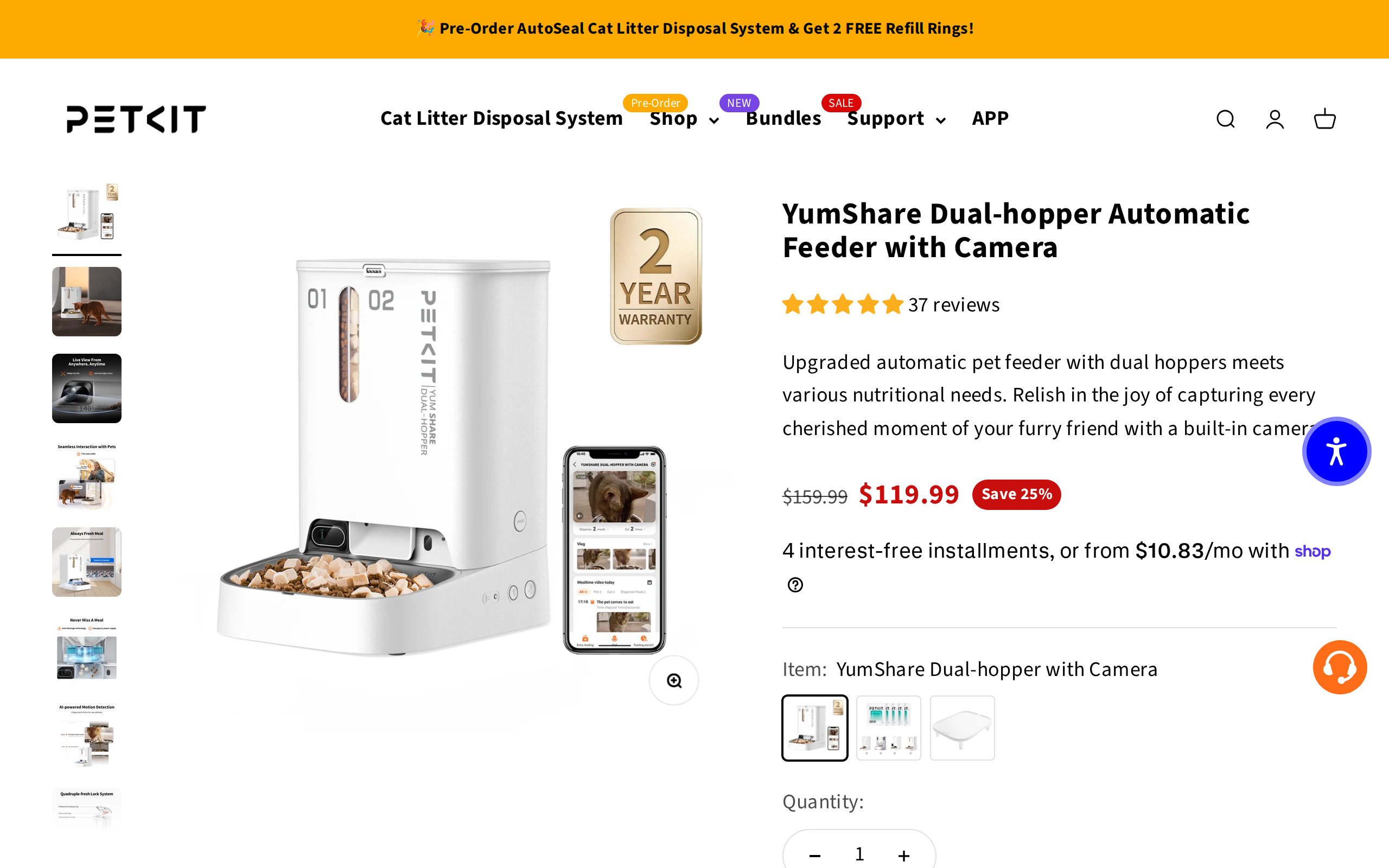
Petkit's product page gives the feeder a 5 L (21 cup) total capacity across two compartments. Each hopper is scheduled on its own, from 1 to 10 portions of 10 to 100 g per feed, which lets you serve kibble on one schedule and treats or a second recipe on another. That suits a cat on a prescription kibble plus a topper, or an owner rotating two foods to keep a fussy eater interested.
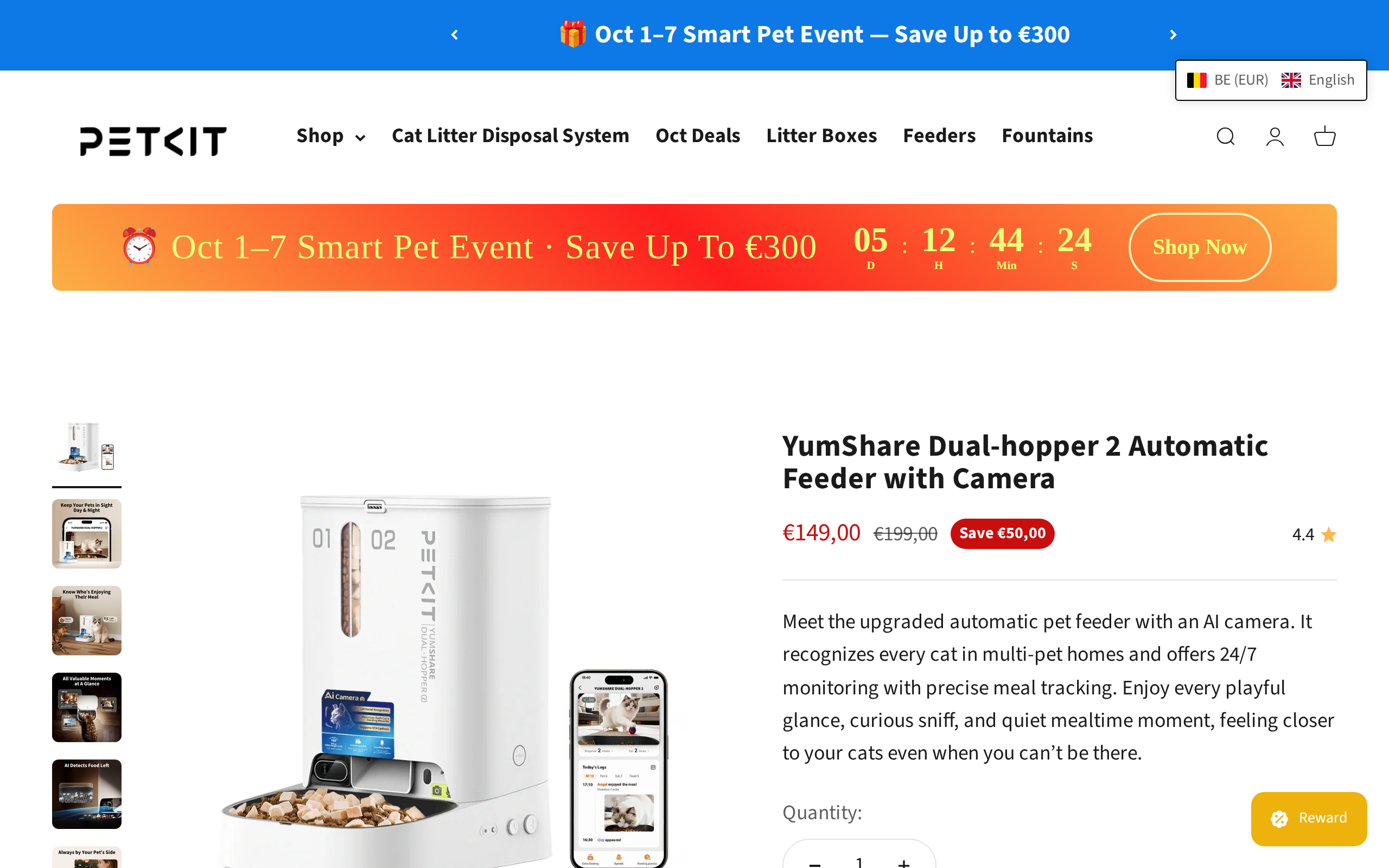
The point where this trips people is the word "pet". The page describes one detachable 304 stainless steel bowl, so both hoppers feed the same spot. Two cats on two diets will still share it. A review of the first generation said the same thing in plain terms: the camera identifies cats visually and cannot stop food stealing.
The camera: what recognition does and does not do
The camera is 1080p with 24/7 monitoring, and it takes before and after pictures of the bowl at each meal. Petkit says the facial recognition identifies up to 15 pets, which lets the app log each one's eating. A roundup of facial recognition feeders notes that, for now, this is trained for cats only, with dogs described as in training.
We would describe the feature as a logbook, not a gate. It tells you which cat ate and how much was left, which is handy when one of them is losing weight and you need to see who is skipping meals. It will not lock the lid on the wrong face.
What it costs after you buy it
The feeder is $145.99 on sale and $169.99 at list. Cloud storage is free for 7 days. Beyond that, playback needs a subscription, which several reviewers mention without giving a price, and we could not confirm current plan pricing on the page we read. Check the app's checkout screen before you rely on week-old clips.
Power is more reassuring. The feeder runs from a 6 V adapter, and four D cells (not included) keep scheduled feeding going for about 60 days of outage. On batteries the camera switches off to save charge, but meals continue, which is the order of priorities we want.
Portions, in real terms
Ten portions at the top of the range is 100 g per feed, and the feeder can only be as exact as the number you set. For a 4 kg adult cat eating two meals, most people will sit at 3 to 5 portions in the main hopper, then use the second for a small treat feed. We do not give calorie targets here, because that is a question for your vet and the food's label, not a feeder review. What matters is that the steps are coarse: 10 g at a time is fine for a cat and rough for a toy dog on a strict diet.
Setup, cleaning and the unglamorous parts
The app is shared with other Petkit gear, so if you already have a Petkit fountain or litter box, the feeder joins the same account. It connects on both 2.4 and 5 GHz Wi-Fi, which spares you the usual hunt for a 2.4-only network. The steel bowl lifts out and goes in the dishwasher, and anti-jam low-food alerts are listed on the page.
One honest complaint from owner feedback is the app, which some find clunky. A second is that the AI that judges how much food is in the bowl is not always right, according to one reviewer we read. Neither is a deal breaker, and both are normal for this price band.
Verdict
Buy it if you have one cat and want kibble plus treats on separate timetables with a camera to confirm they were eaten, or two cats that share a diet and need a log of who eats. Skip it if the plan is for one pet to eat one food while another is kept out: that job needs microchip-based access, which this feeder lacks. Skip it too if you have a dog, since the face recognition will not log it. At the sale price it is a sound mid-range feeder with a clear limit.
What we liked, and what we did not
Pros
- Two independent hoppers, 1 to 10 portions each, for dry food plus treats or two diets
- Dual-band 2.4 and 5 GHz Wi-Fi, which many cheap feeders lack
- Four D batteries give about 60 days of scheduled feeding after a power cut
- Detachable 304 stainless steel bowl that is dishwasher safe
- Camera logs before and after bowl images for each meal
Cons
- Face recognition covers cats only, and it identifies rather than controls access
- Video playback beyond the free seven days needs a Petkit subscription
- One feeding point means a greedy pet can still eat a smaller pet's food
- Backup batteries are not included and the camera switches off on them
- Sold at $169.99 list, so the $145.99 sale price is the one to buy at
Specifications
- Price
- $145.99 sale, $169.99 list
- Capacity
- 5 L (21 cups) across two hoppers
- Portions
- 1 to 10 per hopper, 10 to 100 g per feed
- Camera
- 1080p with AI recognition, 24/7 monitoring
- Recognition
- Up to 15 pets, cats only for now
- Wi-Fi
- 2.4 and 5 GHz
- Backup power
- 4 D batteries, about 60 days
- Cloud storage
- 7 days free, then a subscription
- Size
- 9.74 x 11.53 x 14.25 in
- Warranty
- 2 years