Invoxia Biotracker Review: GPS and Heart Rate, With Trade-Offs
Invoxia's 37 g collar tag adds radar heart and breathing monitoring to live GPS. We check the real battery life, the 35-country coverage and the plan that unlocks tracking.
Our verdict
The only collar we found that mixes live GPS with radar-measured resting heart and breathing, backed by a peer-reviewed study. The trade-offs are 7 to 12 days of real battery, 35-plus countries of coverage and live GPS locked to a paid plan. Skip it for cats, travel or a GPS-only budget.
- Best for
- Senior or sporty dogs, health trends plus live location
Most GPS collars tell you where the dog is. Most health collars tell you what the dog has been doing. The Invoxia Biotracker claims to do both on a 37 g tag: live location from an LTE-M cellular chip, and a radar sensor that counts heartbeats and breaths through the fur while the dog rests. The pitch is that you stop wearing two devices. Our verdict: the combination is real, but it costs you in battery, coverage and monthly fees.
What is on the tag
The tag clips to a collar up to 2.5 cm wide, weighs 37 g and is rated IP67. It carries six biometric sensors, GPS on LTE-M, Wi-Fi and Bluetooth 5.3. Invoxia says it recognises more than ten behaviours, scores sleep and can flag signs of atrial fibrillation. Battery life is advertised at up to 15 days.
The health numbers are the unusual part. Invoxia points to a peer-reviewed study, AI-COLLAR, which compared the radar readings with a portable ECG and manual counting and reported 99.6% accuracy for heart rate and 98.6% for respiratory rate. Treat that as a lab result in resting dogs, not a diagnosis. The measurement works best when the dog is lying still, which is a limit that few product pages stress.
Nothing here is a medical device for your own purposes. If the collar shows a number that worries you, the next step is a vet appointment, not an app chatbot.
Where the "no compromise" claim breaks
Battery
The 15-day figure is a best case. PawTech Review measured 7 to 12 days of real mixed use, and another tester put it nearer 8 to 10 days with faster updates and 5 to 6 days away from Wi-Fi. Live mode drains it fastest. If you are the type who forgets to charge a phone, this is a weekly chore.
Coverage
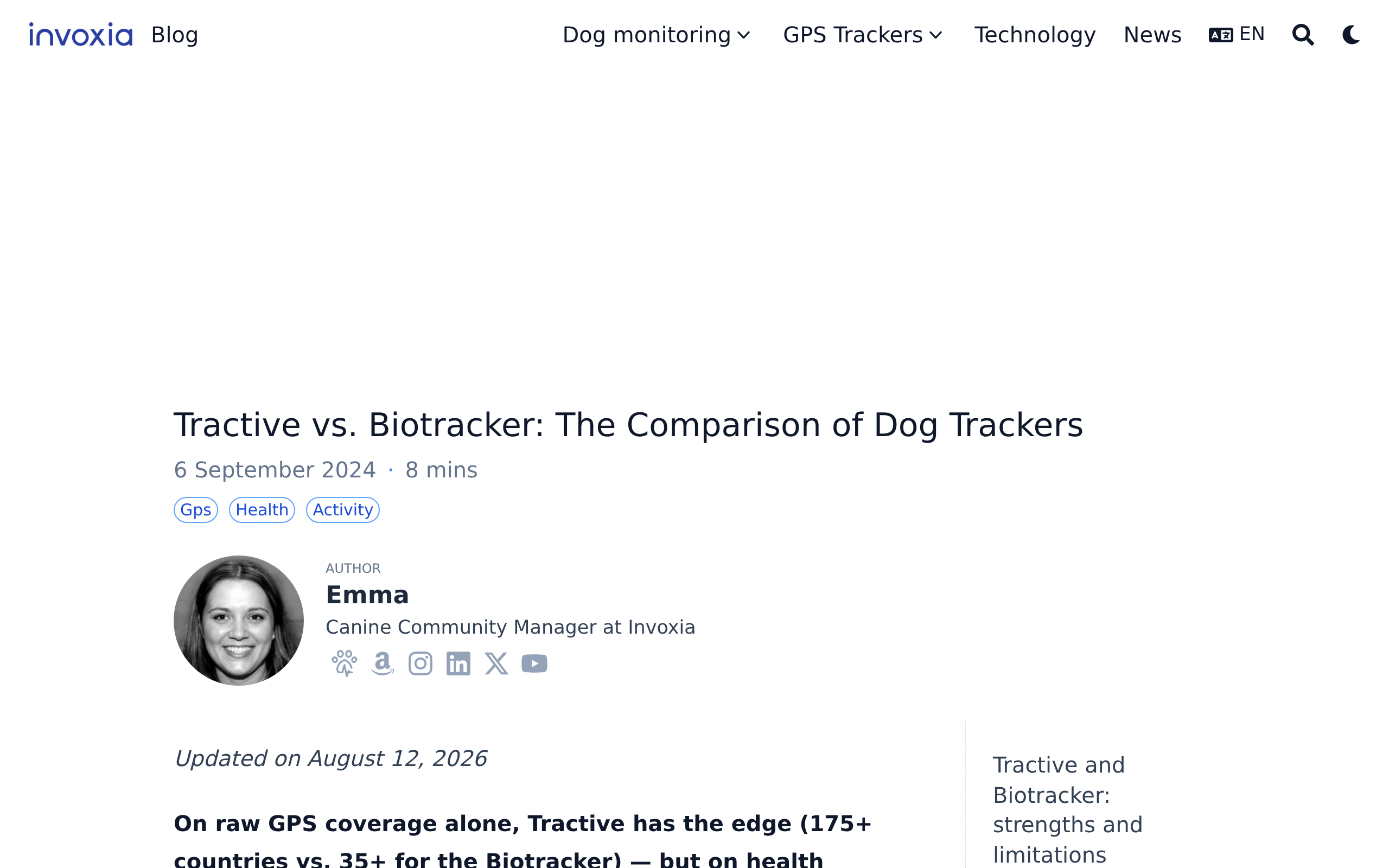
Invoxia's own comparison with Tractive concedes the point: 35-plus countries for the Biotracker against 175-plus for Tractive. Outside LTE-M coverage, a Bluetooth-only plan is all you get. The tag also needs a cellular signal, and a French test found it fails in isolated areas with no network.
Activity data
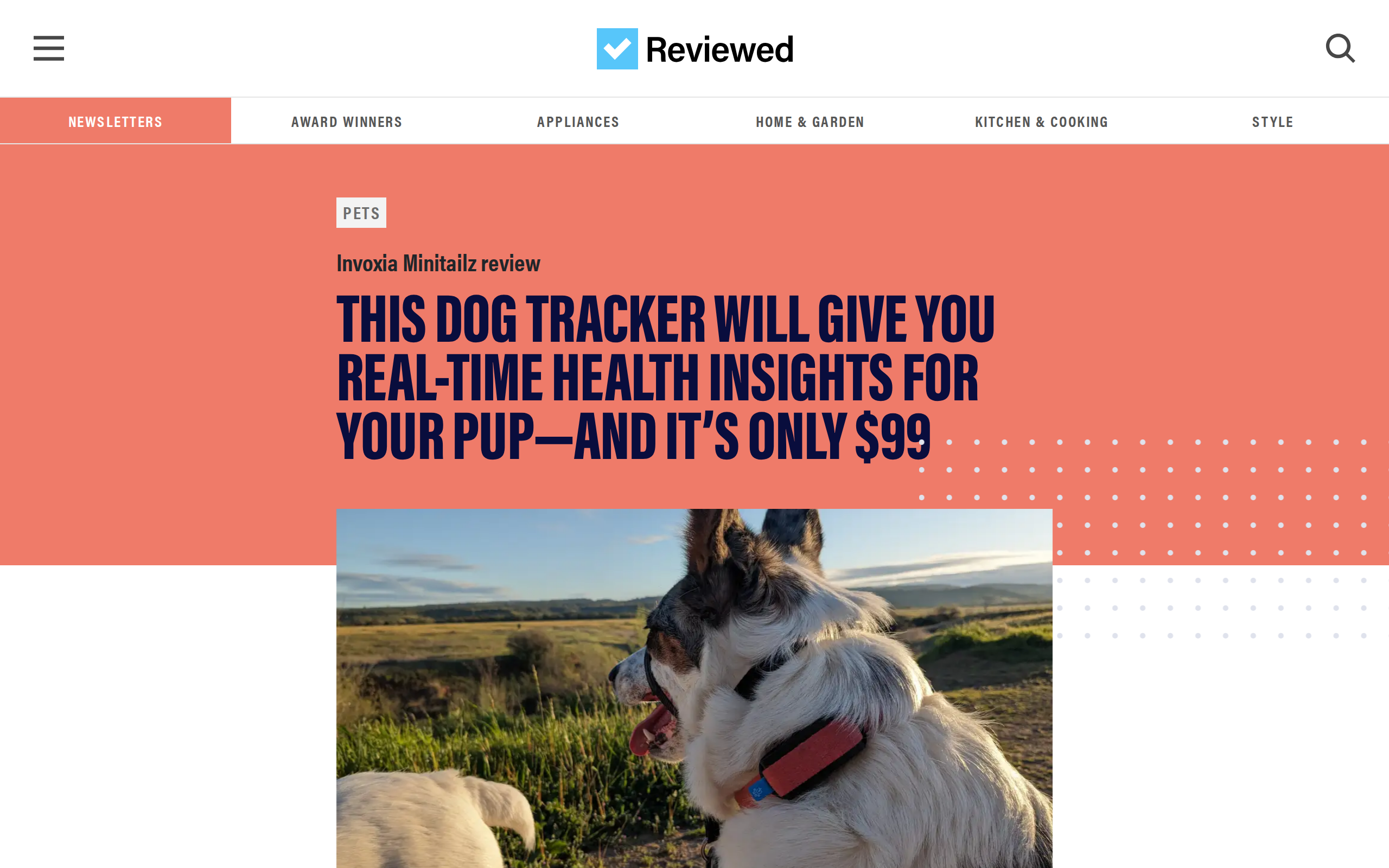
Reviewed measured the earlier Minitailz as accurate about 60% of the time. A 45-minute walk was logged as 17 minutes. That is poor for a collar sold on data, and it is why we would trust the heart and breathing trends more than the step counts.
The money, spelled out
Invoxia's page lists the tag from 119 euros. US reviewers cite $99 for the tag, and PawTech Review says availability in the US is inconsistent, so check stock before you plan around it.
The plans on the maker's page are three:
Basic: free, Bluetooth-only health tracking with 7 days of history.
Plus: 7.50 euros a month, adding AI alerts, daily reports, a chat feature and unlimited history.
Max GPS: 10.83 euros a month, with real-time live tracking, escape alerts and remote syncing.
Live GPS, the thing most people buy a collar for, sits on the top plan. PawTech Review puts the three-year cost near $315 on the cheaper US route. A French tester quoted 219 euros a year for the Max tier. Prices differ by region and have shifted, so read the checkout screen before you commit.
How it behaves in use
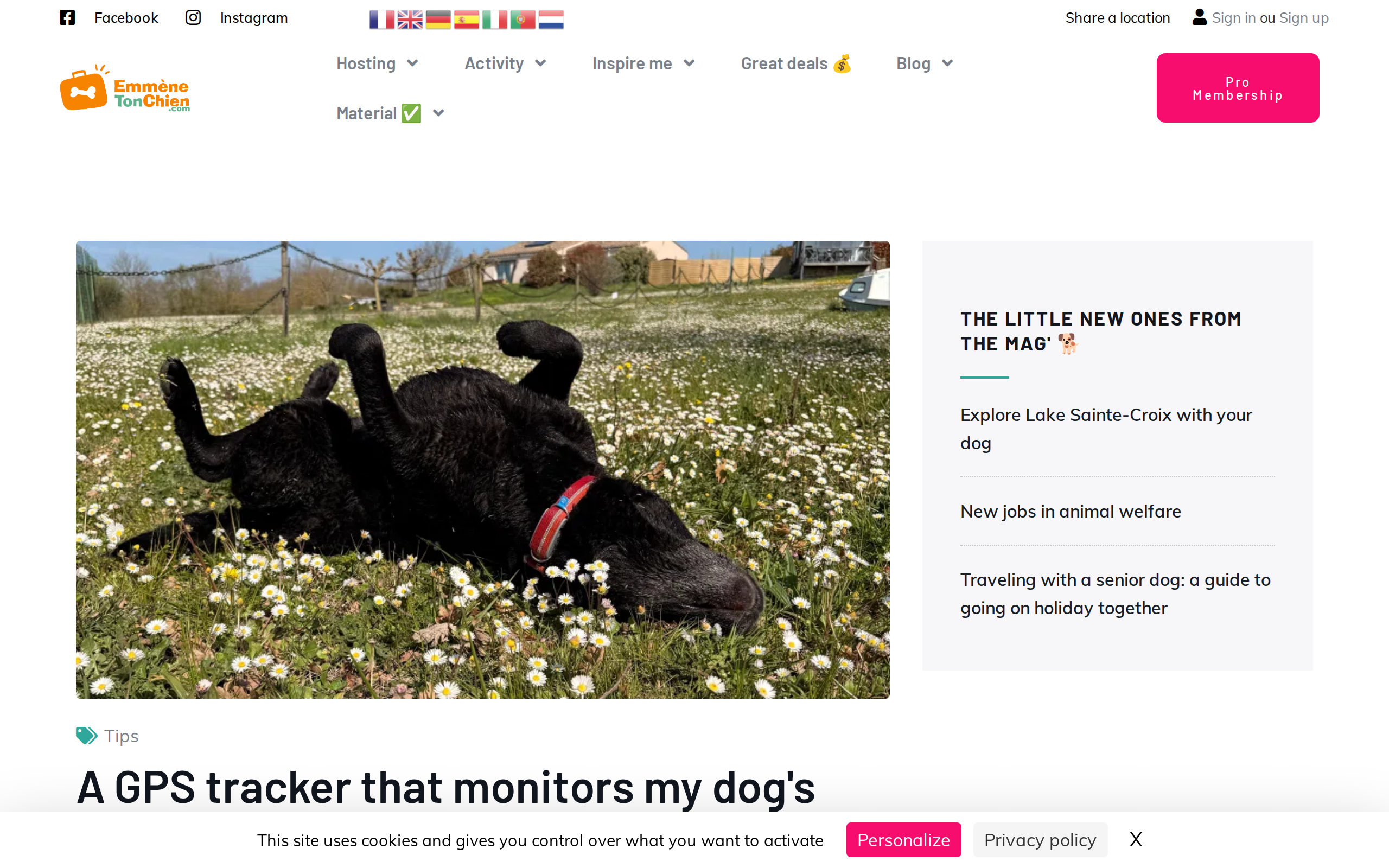
Live tracking is fast: Invoxia and PawTech Review both say one position per second in the 2026 edition, and the French tester called the accuracy surprisingly good. But the same tester found live mode limited to 30 minutes at 30-second intervals according to user comments, and called the zone alerts easy to miss and the find-my-dog sound barely audible. Those are things you only learn by wearing it.
The collar must be worn continuously for the health data to mean anything, and there is a short adjustment period for the dog. The app shows simple daily and weekly indicators, including heart rate variability, which testers found helpful for senior or athletic dogs. Switching profiles with several dogs means a trip into settings each time.
Who should buy it
Buy it if you have an older or sporty dog and want a long-term resting heart and breathing record alongside a location tag, and your area has LTE-M coverage. Skip it if you want the best GPS on a budget, since Tractive costs less to run, or if you travel widely, own a cat (the Biotracker is not validated for them) or expect hospital-grade metrics. PawTech Review notes PetPace offers more clinical measures.
We would rate it as a thoughtful health collar with a capable but pricey GPS attached. It does what it says. It just does not do it for free.
What we liked, and what we did not
Pros
- Radar reads heart and breathing through fur, no skin contact needed
- Free Basic plan keeps Bluetooth health tracking at no cost
- One-second live position updates in the 2026 edition
- Light 37 g tag with IP67 water resistance
Cons
- Live GPS and escape alerts need the Max GPS plan
- Tested battery runs 7 to 12 days, not the claimed 15
- LTE-M coverage spans about 35 countries against 175 for Tractive
- Activity counts were only about 60% reliable in one test
Specifications
- Price
- From 119 euros (US reviewers cite $99)
- Weight
- 37 g, fits collars up to 2.5 cm wide
- Water resistance
- IP67
- Connectivity
- LTE-M, Wi-Fi, Bluetooth 5.3
- Sensors
- Six biometric sensors, radar heart and breathing
- Battery
- Up to 15 days claimed, 7 to 12 days tested
- Live GPS
- One update per second in the 2026 edition
- Plans
- Basic free, Plus 7.50 euros a month, Max GPS 10.83 euros a month
- Coverage
- LTE-M in about 35 countries